If You Are Searching for #57 Stone, You Probably Need an Answer Today
Nobody searches “where can I buy #57 stone” because they are curious about rocks. Usually there is a driveway to fix, a drain to finish, concrete to pour or a contractor who has already asked, “Did you get the stone ordered?”
That is why the most useful answer is not a geology lesson. It is knowing what #57 actually does, whether it fits your job, where you can get it around Greensboro and what can go wrong once several tons of it are sitting on a truck.
So What Is #57 Stone, Really?
#57 is an aggregate designation, not a brand name. In North Carolina you may see it listed as NCDOT #57. What homeowners usually notice first is that it is a clean stone, meaning it does not contain the same amount of fines you would find in dense-graded base material.
Those open spaces between the stones are useful. Water can move through them, which is why #57 is so common in drainage conversations. But the same characteristic also means it does not behave like a compactable base full of smaller particles. That difference matters the moment tires, slope and water enter the picture.

Where #57 Stone Makes Sense
#57 commonly shows up in drainage work, residential drains, concrete-related applications and selected driveway uses. The word selected is doing a lot of work there. A stone that drains beautifully is not automatically the stone you want to use as the structural answer for every driveway.
If your actual goal is building or repairing a driveway, decide what each layer needs to accomplish before ordering by a product number alone. Our driveway gravel guide for Greensboro breaks that down in plain English.
#57 vs. ABC: They Are Solving Different Problems
ABC and #57 get compared as if one must beat the other. That is the wrong contest. Dense-graded ABC contains fines that help it tighten and compact. #57 is cleaner and leaves more void space.
If you need a firm compacted base, that points the conversation toward dense-graded material. If you need drainage or clean stone, #57 may make far more sense. A well-built driveway may use both because the bottom of the driveway and the top of the driveway are not being asked to do the same job.
Can #57 Be the Finished Surface?
Yes, it can be used in driveway applications. The better question is whether it belongs on your driveway.
On a stable, well-prepared base, clean stone can work well in the right setting. On a steep drive, weak base or muddy section, it may move, sink or expose a problem underneath. The smartest choice depends on base strength, drainage, slope, traffic and the finish you want to live with every day.
The Most Expensive Guess Is “That Looks About Right”
Measure the length, width and intended depth of the area before you call. A supplier calculator is a great estimating tool, but it is still an estimate. Material, placement and site conditions all affect the final quantity.
Being slightly short on a small project is annoying. Being short on a long driveway can mean another truck, another delivery charge and another day waiting on material. Measure first, then talk through the quantity with the supplier.
Buying the Stone Is Only Half the Decision
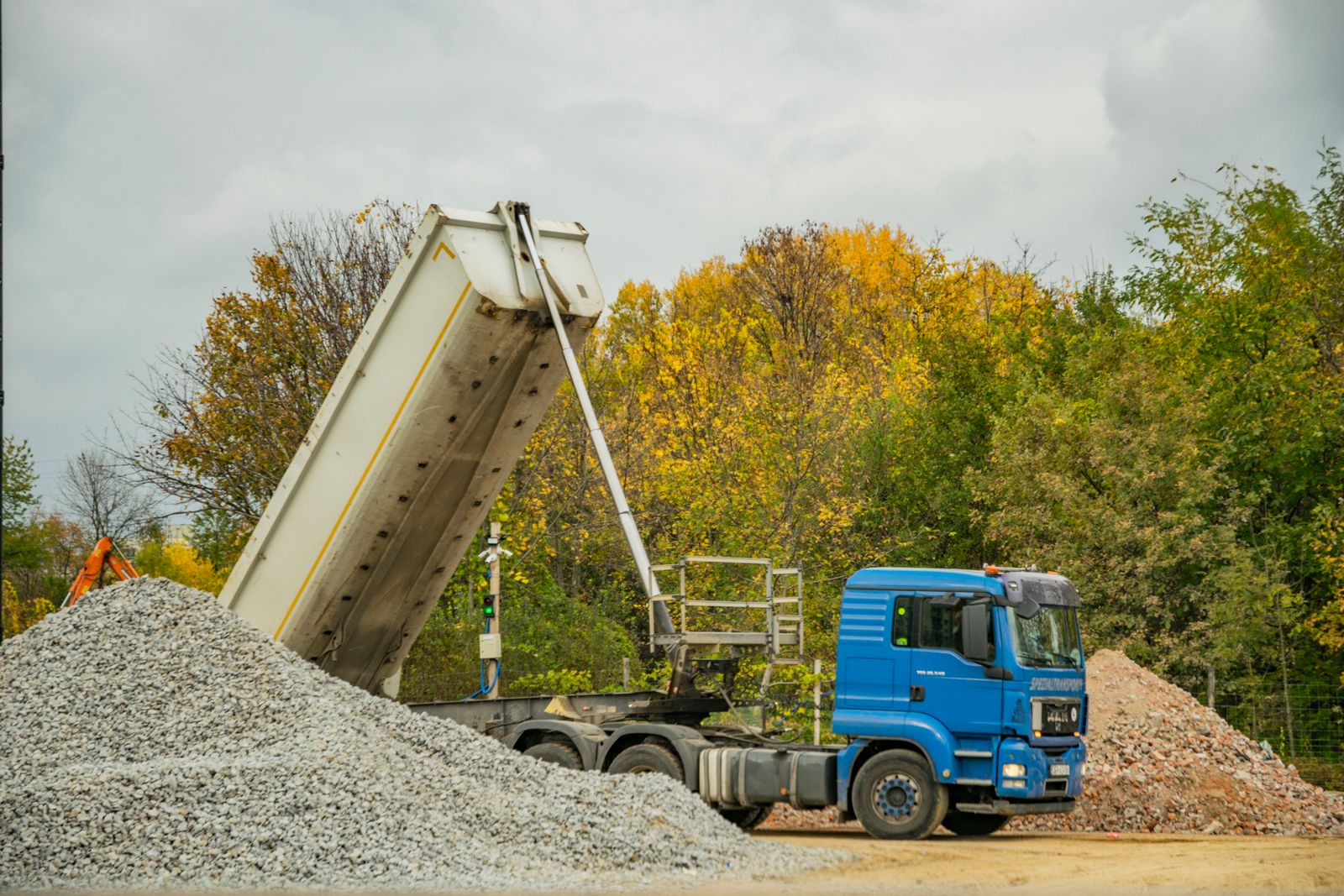
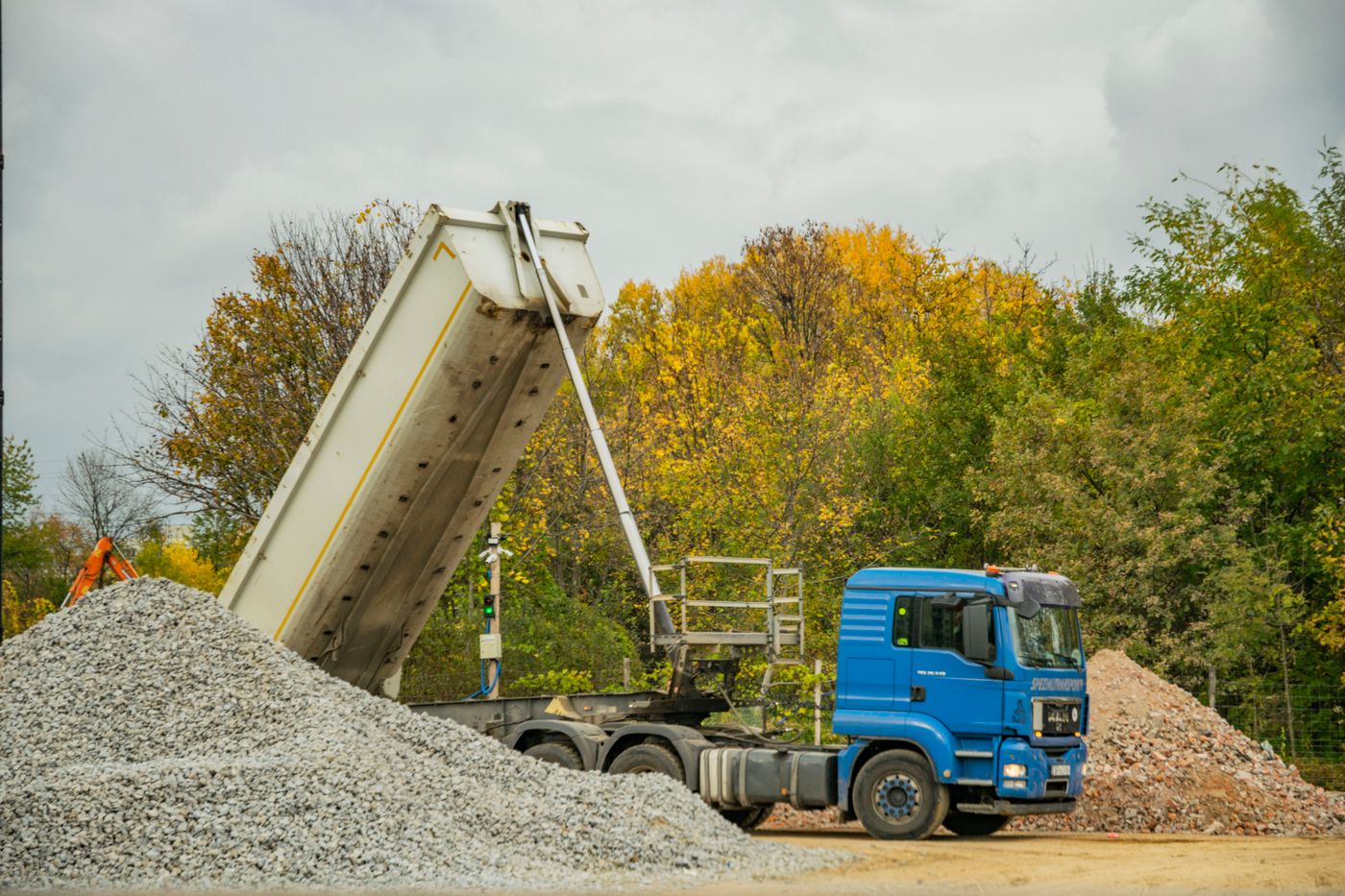
Once you move from bags to tons, delivery becomes part of the project. Luck Stone uses third-party contract haulers and says curbside delivery with the material dumped in large stockpiles is the standard guarantee. Spreading may be available, but it is not something to assume.
Before the truck arrives, decide where it can safely go. Think about soft ground, overhead wires, septic systems, culverts, irrigation, buried utilities, low limbs and narrow turns. Someone should know exactly where the pile belongs before the driver is sitting there with several tons of stone and a schedule to keep.
An 80,000-Pound Truck Changes What “Accessible” Means
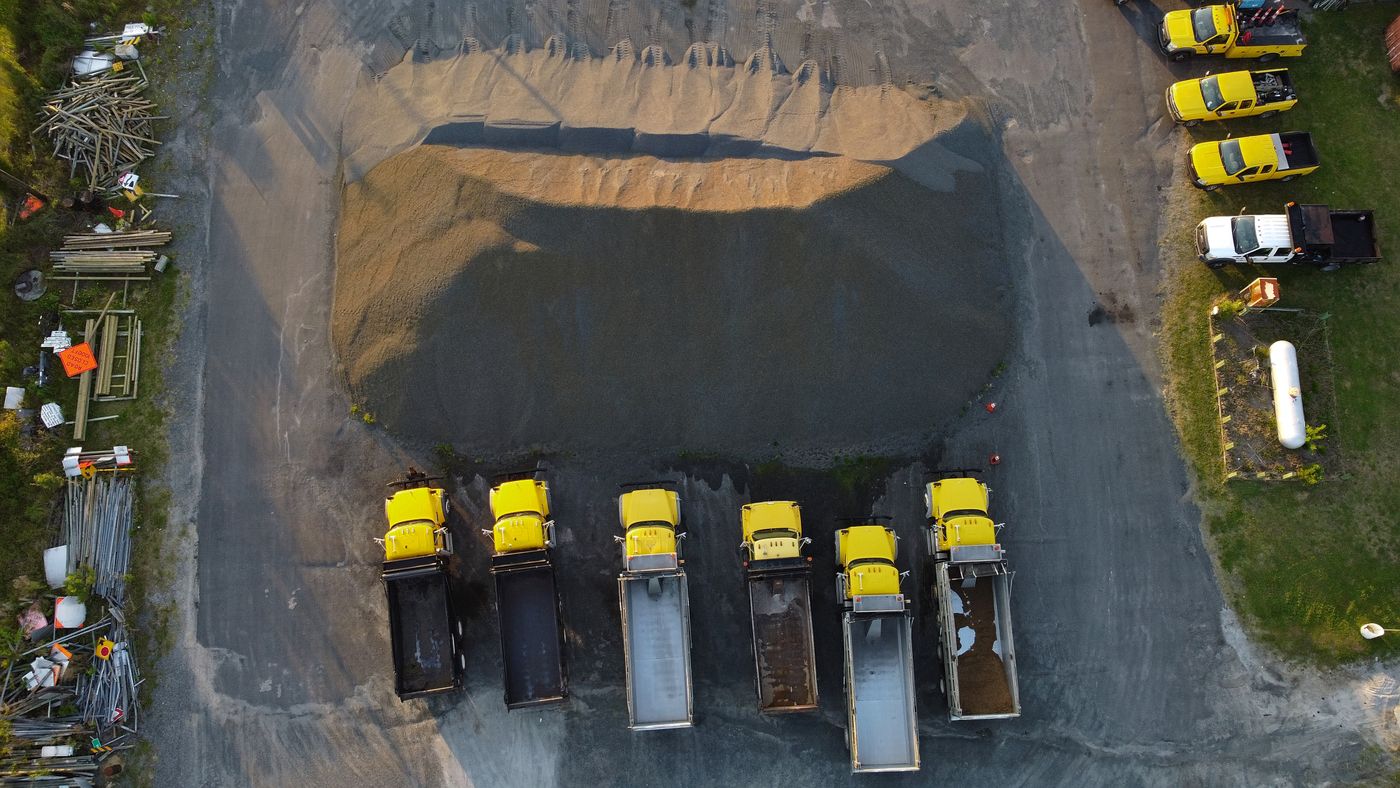
Luck Stone notes that a loaded dump truck can weigh as much as 80,000 pounds. That number has a way of making a soft yard, a repaired driveway or a questionable culvert look very different.
The truck may be carrying exactly what you need to fix a weak area while being far too heavy to drive onto that same weak area. Pick a safe dumping location before delivery day. If spreading matters, ask about it when you order rather than hoping it can be figured out at the curb.
Do Not Let the First Real Decision Happen After the Truck Arrives
Bulk stone is wonderfully simple once you know what you need. Before that point, it can become a very heavy mistake.
Tell the supplier what you are building, what the ground is doing, how much slope you have and where a truck can safely unload. If somebody told you “#57 works for driveways,” add the missing half of the sentence: for which part of the driveway?
A few minutes spent confirming the material, quantity and delivery plan is far easier than figuring out how to move 15 tons of perfectly good stone that landed in exactly the wrong place.
Questions to Ask Before You Place the Order
- Is the material currently available at the plant serving my location?
- Is this NCDOT #57 or another #57 specification?
- What is the current price and how is it quoted?
- Is there a delivery minimum?
- What truck sizes are available?
- Can the load be spread, or will it be dumped in one stockpile?
- How far in advance should delivery be scheduled?
- What site conditions does the hauler need to know about?
If the reason you are buying #57 is a muddy driveway, stop here and read best stone for a muddy driveway. If you are comparing #57 to other finished-driveway choices, see best stone for a gravel driveway in Greensboro NC.
Useful claims should have somewhere to go when you click them
Frequently Asked Questions
Where can I buy #57 stone near Greensboro NC?
Luck Stone is one Greensboro-area option worth checking. Its Eden Plant says it serves the northern Greensboro market, and NCDOT #57 appears in Luck Stone’s North Carolina product filters. Confirm live inventory and delivery before ordering.
Does Luck Stone sell #57 stone?
Luck Stone lists NCDOT #57 in its product system. Inventory varies by plant, so verify the material with the location that will actually serve your job.
Can #57 stone be delivered in Greensboro?
Luck Stone offers delivery through contract haulers. Ask about service area, minimum load, truck size, timing and whether spreading is available for your address.
What is #57 stone used for?
Common uses include drainage, residential drain work, concrete-related applications and certain driveway layers.
Is #57 stone good for driveways?
It can be. The important question is which layer you are building. #57 is clean and open; it does not behave like a dense-graded compactable base.
Does #57 stone compact?
It can settle and interlock, but it does not compact like a dense-graded aggregate containing fines. It keeps more open space between particles.
Is #57 stone good for drainage?
Yes. The open spaces between the stones let water move through, which is one reason #57 is so common in drainage applications.
What is the difference between #57 stone and ABC?
#57 is cleaner and more open. ABC contains fines and is designed to compact more tightly. They are often chosen for different jobs within the same project.
What is the smallest Luck Stone delivery?
Luck Stone has stated that a typical minimum delivery is 5 tons, but confirm the current minimum with the plant serving your address.
Should I pick up stone or have it delivered?
For small quantities, pickup may make sense if your vehicle and trailer are properly rated. For driveway-sized orders, delivery is often more practical. Compare quantity, hauling capacity, distance and delivery cost.
Stone is not a new side project for Luck Stone
Charles Luck Jr. opened the business that grew into Luck Companies.
Luck Companies celebrated its centennial in 2023.
Luck Stone describes itself as the nation's largest family-owned and operated producer of crushed stone, sand and gravel.
The Eden and Mount Airy plants joined Luck Stone in 2021, expanding its North Carolina presence.
Company-history claims above are drawn from Luck Stone's own company history and North Carolina expansion announcement. Read the centennial story.