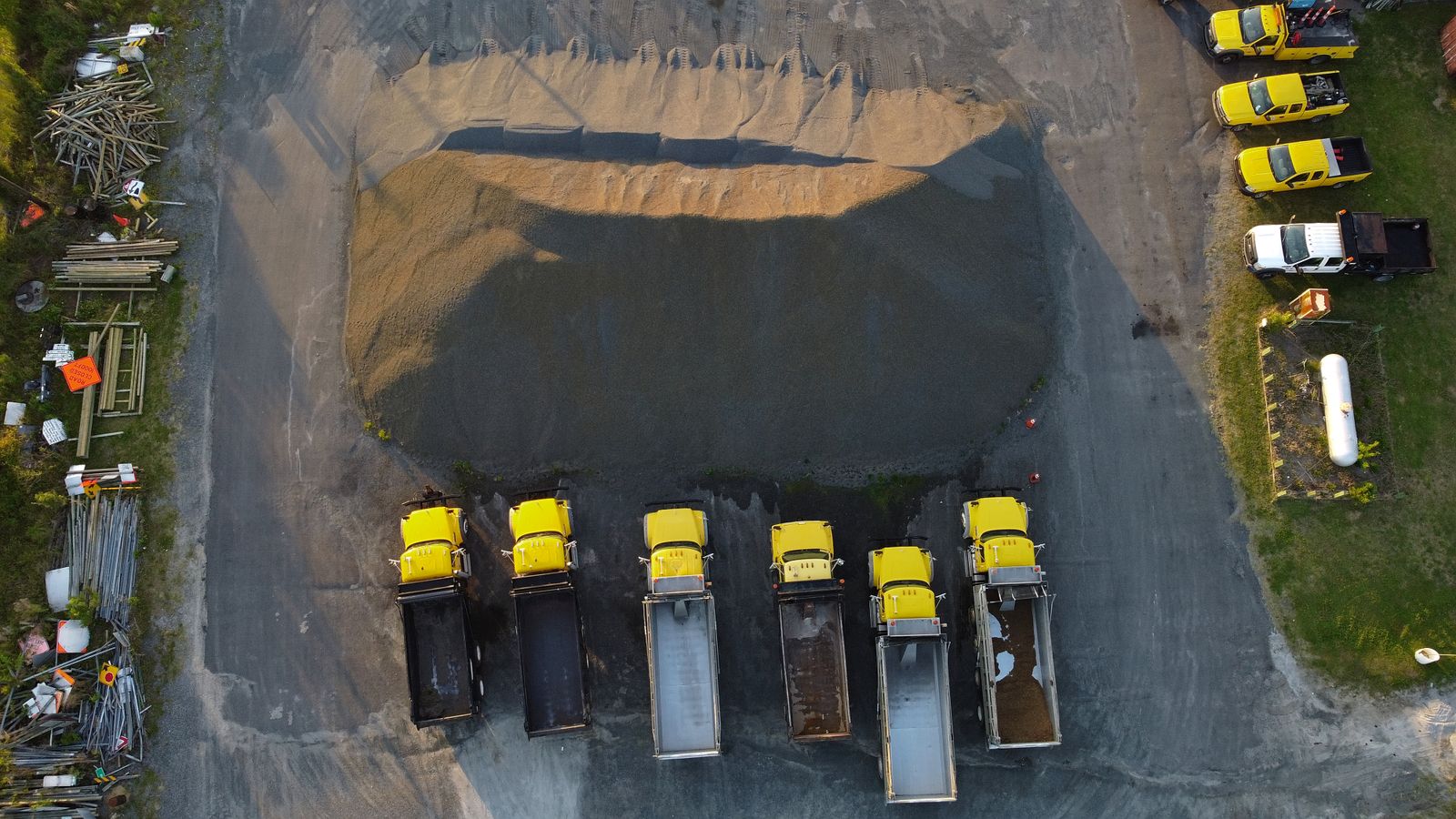
The Phrase “Driveway Gravel” Causes Half the Confusion
Walk into a stone yard and say, “I need driveway gravel,” and the best response is another question: Which part of the driveway are you building?
A new driveway needs support. A solid driveway may only need a fresh surface. A wet area needs water management. A soft area may need stabilization. Four homeowners can type the exact same Google search while needing four very different materials.
If You Need a Base That Packs Tight, Start Here
Dense-graded aggregate combines larger stone with smaller particles and fines. Those smaller pieces fill the spaces between the larger pieces, allowing the material to compact into a tighter, firmer layer when installed correctly.
In North Carolina, ABC is a term you will hear often. “Crusher run” is also used as a familiar shorthand for compactable mixtures, but names can vary. Ask for the actual specification instead of assuming every pile with the same nickname is identical.
#57 Stone Is Popular Because It Does a Different Job Well
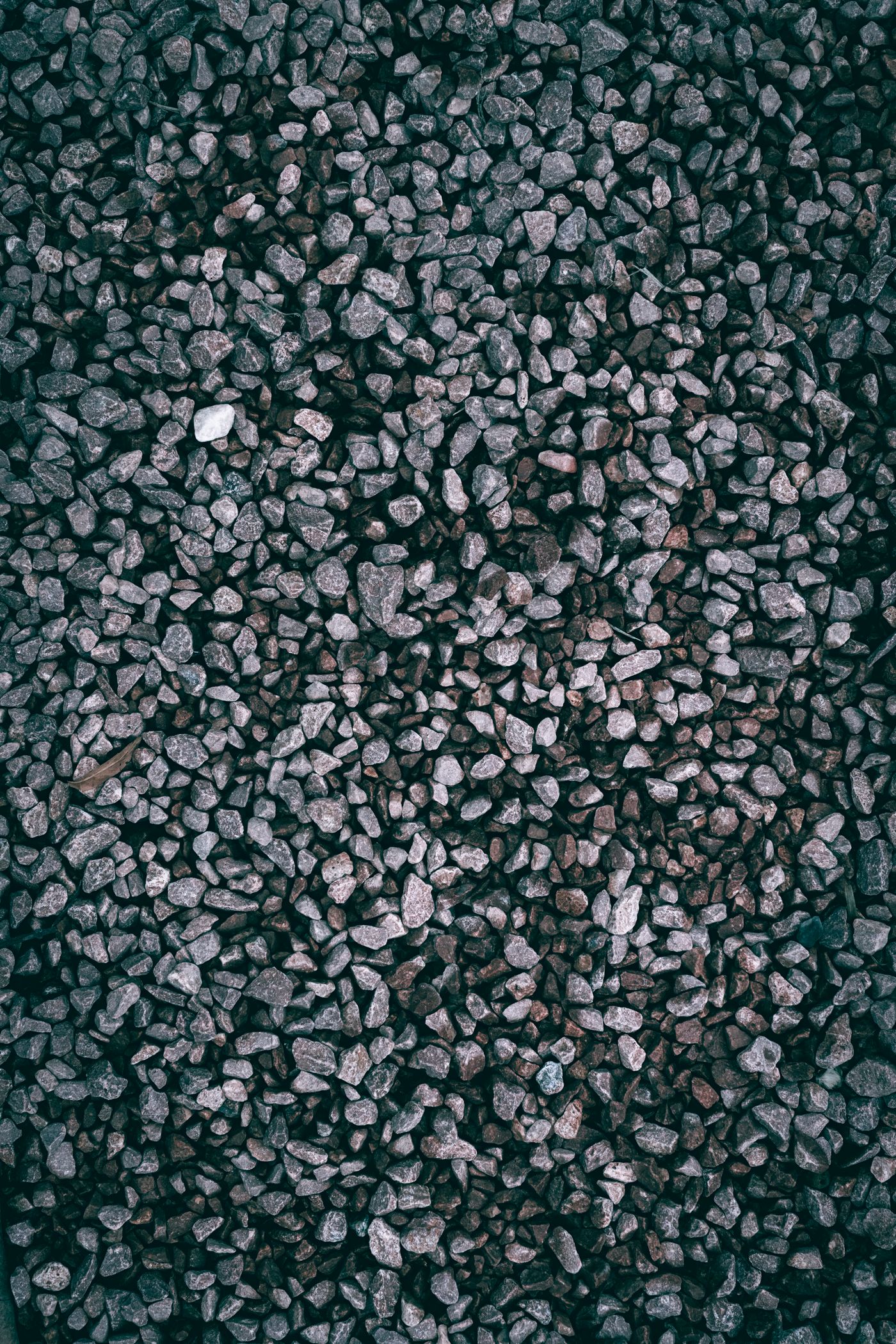
#57 is one of the most familiar stone sizes for homeowners. It is clean, relatively open and useful in drainage, concrete and selected driveway applications.
Because it has fewer fines than dense-graded base material, water can move through the spaces more easily. That can be exactly what you want in one layer and exactly what you do not want in another. If #57 is the material you are considering, see our Greensboro #57 stone buying guide.
When the Ground Is Soft, Think Bigger Before You Think Prettier
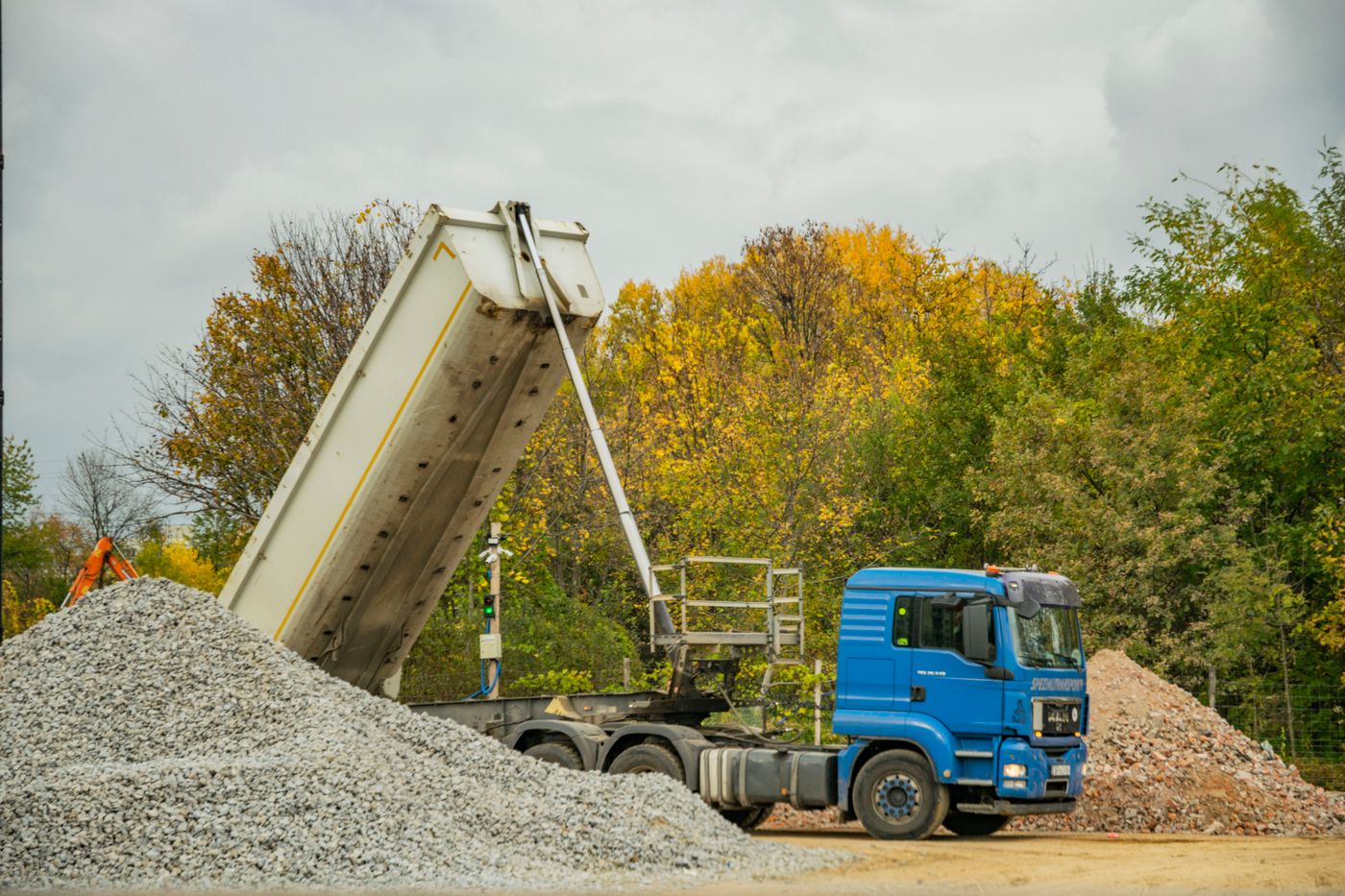
Luck Stone lists larger open-graded aggregate for new driveway bedding, stabilizing soft terrain and bridging muddy areas. That is a completely different job from giving an already-solid driveway a fresh top layer.
If your tires sink after rain or the driveway keeps swallowing stone, start with our muddy driveway guide. A beautiful surface cannot rescue a foundation that is still moving underneath it.
Your Property Gets a Vote
There is no special “Greensboro gravel,” but local weather and site conditions absolutely affect what works. Hard rain, sloped lots, tree roots, freeze-thaw periods and different native soils all change the way water and traffic interact with a driveway.
The best field test is free: watch the driveway during a storm. See where water enters, where it speeds up, where it sits and where it leaves. Those observations can narrow your material choice faster than reading another ten product descriptions.
Are You Building a Driveway or Refreshing One?
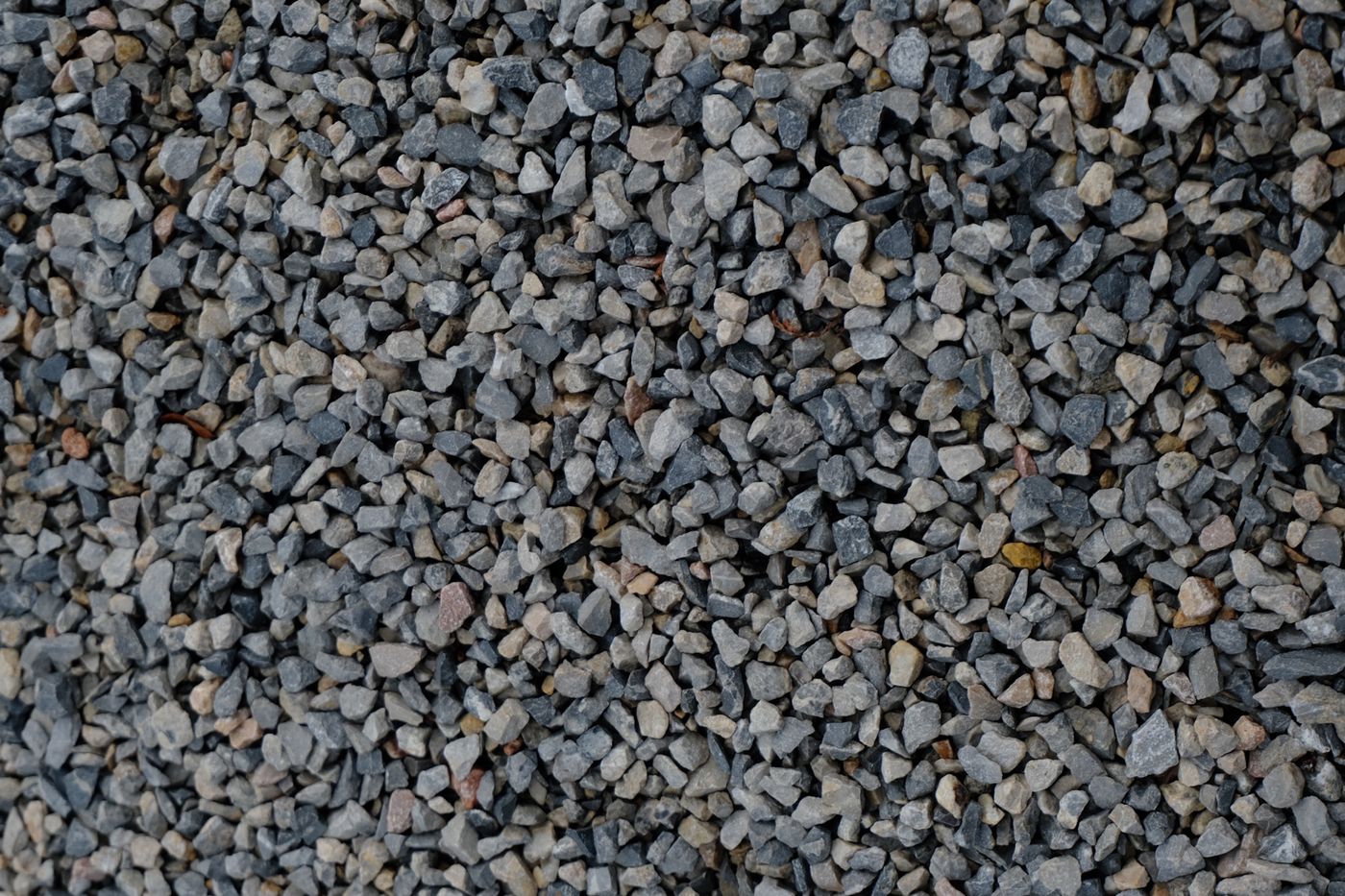
If you are building from scratch: think in layers. Subgrade preparation, separation where needed, stabilization, compactable base and finish material may all matter. Build for the heaviest traffic you reasonably expect.
If the existing driveway is already firm: do not tear apart what works. Regrade, fix drainage issues and replenish the right surface material. A cosmetic refresh and a structural repair are completely different projects.
If you are building from scratch
Think in layers. Subgrade preparation, separation where needed, stabilization, compactable base and finish material may each play a role. The driveway should be designed for the heaviest traffic you reasonably expect, not only the sedan that parks there every night.
If you are resurfacing a sound driveway
You may not need to rebuild what already works. Regrading, correcting isolated drainage issues and adding the appropriate surface material can be enough. The mistake is treating a structural failure like a cosmetic refresh.
Steep Driveways Turn Water Into a Bigger Problem
On a steep driveway, stone is fighting two forces at once: vehicle traffic and moving water. Material that stays put on a flat drive may migrate on a slope, especially when runoff is concentrated in the wheel tracks.
That is why crown, cross-slope, ditching and other drainage details can matter as much as the stone itself. If the driveway is acting like a stream every thunderstorm, changing aggregate alone will not fix the design.
Do the Math After You Know What You Are Actually Building
Length × width × depth is the starting point. Turning that volume into tons depends on the material, and supplier calculators are best treated as estimates.
Measure after grading when possible. Decide whether you are filling isolated holes, raising the whole driveway or applying a consistent top layer. Those three jobs may look similar from the road and require very different amounts of stone.
Choose the Job First. Choose the Stone Second.
Most bad driveway purchases start with a product name instead of a problem.
Someone says #57. Someone else says ABC. A neighbor swears by crusher run. All three can be right in the right place.
The better question is what you need the material to do. Support weight? Pack tightly? Move water? Bridge mud? Refresh a solid surface?
Once you answer that, the stone conversation becomes dramatically easier. The best driveway is rarely built from one magical material. It is built by putting the right material in the right layer.
Luck Stone and the Northern Greensboro Market
Luck Stone’s Eden Plant says it serves the northern Greensboro market as well as surrounding communities and counties. That makes Luck Stone relevant to Greensboro-area buyers, but product availability can vary by location. Use the company’s official locations and products tools before assuming a particular gradation is currently stocked at the plant that serves your project.
A Fast Way to Narrow the Choice
- I need a compactable base: start by asking about dense-graded aggregate such as NCDOT ABC or the appropriate crusher-run-type product.
- I need clean stone and drainage: ask whether #57 or another open-graded product fits the application.
- The ground is soft: ask about stabilization and larger open-graded stone before surfacing.
- The driveway is already solid: focus on finish, grading and maintenance rather than rebuilding the base.
For a direct comparison of finished-driveway choices, continue to best stone for a gravel driveway in Greensboro NC.
Useful claims should have somewhere to go when you click them
Frequently Asked Questions
What is the best gravel for a driveway in Greensboro NC?
The best material depends on the layer and site. Dense-graded aggregate is commonly used for compactable base work, clean stone may be used where drainage matters, and soft ground may need larger stabilization stone first.
Is ABC or #57 better for a driveway?
They do different jobs. ABC is a dense-graded material designed to compact; #57 is cleaner and leaves more void space. The better choice depends on whether you need base strength, drainage, surface material or a combination.
What is the difference between crusher run and #57 stone?
Crusher-run-type material contains a range of particle sizes and fines that help it compact. #57 is cleaner, more open graded and generally drains more freely.
What gravel packs down the hardest?
Dense-graded aggregate is designed to compact because smaller particles fill voids between coarse aggregate. Proper moisture and mechanical compaction still matter.
What gravel is best for drainage?
Open-graded clean stone is commonly selected when drainage is the goal because the voids between particles allow water to move.
How deep should a gravel driveway be?
There is no universal depth. Existing soil, traffic, slope, drainage and whether you are resurfacing or building from scratch all affect the design.
Can I put new gravel over an old gravel driveway?
Yes, when the existing base is stable. Grade and repair drainage first so the new material is not simply covering old failures.
What is best for a muddy section?
A muddy section may need stabilization with larger aggregate, separation fabric or drainage work before a normal driveway surface is installed.
Does Luck Stone serve Greensboro?
Luck Stone states that its Eden Plant serves the northern Greensboro market. Confirm current service area, product availability and delivery directly with Luck Stone.
Where can I compare Luck Stone products?
Use Luck Stone’s official product page and location finder to confirm current products, specifications and plants.
Stone is not a new side project for Luck Stone
Charles Luck Jr. opened the business that grew into Luck Companies.
Luck Companies celebrated its centennial in 2023.
Luck Stone describes itself as the nation's largest family-owned and operated producer of crushed stone, sand and gravel.
The Eden and Mount Airy plants joined Luck Stone in 2021, expanding its North Carolina presence.
Company-history claims above are drawn from Luck Stone's own company history and North Carolina expansion announcement. Read the centennial story.